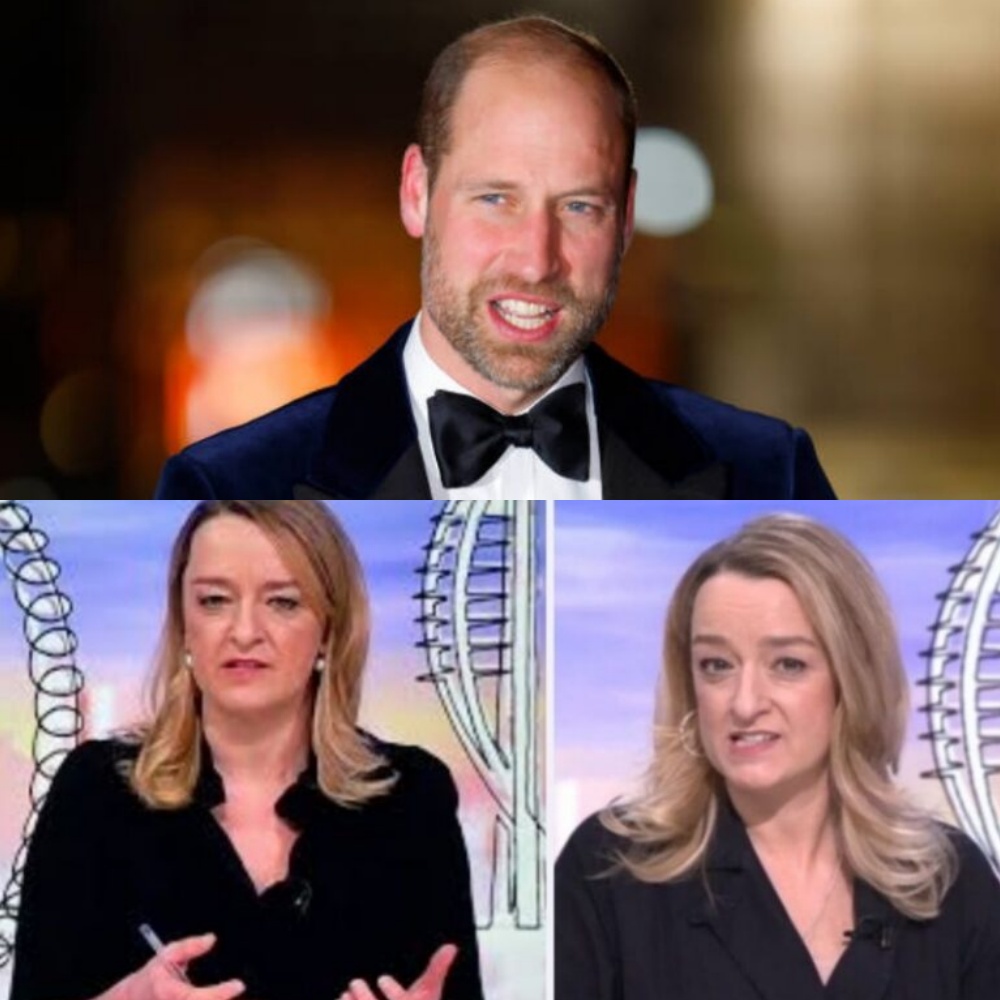
Prince William’s BBC Walkout Leaves Viewers Fiercely Divided After Interview Takes Unexpected Turn
Viewers were still trying to process what they had seen when clips from the interview began racing across social media.
Some called Prince William’s response a long-overdue challenge to Britain’s media establishment. Others believed a senior royal had simply walked away when the questioning became uncomfortable.
Either way, the tightly controlled television interview had become something far bigger than a studio conversation.
Within minutes, audiences were arguing over William’s composure, Laura Kuenssberg’s questioning and the moment applause appeared to overwhelm the programme itself. The exchange was soon being discussed in homes, workplaces and pubs, with viewers sharply divided over who had crossed the line.
It had not begun as an obvious television crisis.
The discussion opened around privilege and the distance between public commentary and the consequences experienced by ordinary people. Kuenssberg’s approach was confident and direct, but some viewers felt the questioning carried a dismissive edge.
William remained unusually still as he listened.
Rather than interrupting or immediately defending himself, he appeared to study the argument being put to him. That restraint became one of the most discussed details of the broadcast, with supporters later suggesting he had been preparing a careful response rather than struggling to answer.
The atmosphere changed when his position was linked to the idea of speaking from privilege.
Instead of rejecting the accusation, William turned the argument towards responsibility. He spoke about time spent away from television cameras, working with charities and meeting families dealing with grief in communities that rarely receive national attention.
His answer focused on the practical reality of service rather than royal status.
He described hours spent listening to people in neglected towns and contrasted that experience with opinions delivered from the safety of a studio. The point was not presented as a dramatic personal defence. It was offered as a challenge to the assumption that privilege automatically removes someone from real hardship or responsibility.
That change in direction appeared to catch the room off guard.
Quiet reactions from the studio audience soon became audible approval. As William continued, the murmurs grew into applause, breaking the controlled rhythm normally expected from a major political interview.
Kuenssberg attempted to bring the conversation back to her original line of questioning, but the balance had already shifted.
For many watching at home, this was the moment the programme stopped feeling like a conventional interview. The host was no longer setting the entire pace, while the guest was no longer responding within the expected boundaries.
William then delivered the remark that would dominate the reaction online, declaring that Britain had grown tired of smug commentators.
There was no raised voice or theatrical outburst. According to those watching, the impact came from how calmly the statement was delivered.
The audience responded immediately. Applause broke out as producers reportedly tried to regain control of the broadcast.
William then stood, fastened his jacket and thanked Kuenssberg before leaving the chair. Cameras remained on the studio long enough to capture the silence left behind before the programme moved away.
That brief exit became the defining image of the evening.
Supporters praised William for refusing to accept what they saw as condescension disguised as serious questioning. They argued that his answer reflected growing frustration with commentators who discuss hardship without experiencing the consequences themselves.
Critics viewed the moment very differently.
They said public figures, particularly members of the Royal Family, should be prepared to face uncomfortable questions without leaving. Some warned that a supportive studio audience should never replace proper scrutiny, however popular the guest’s response might be.
The argument quickly moved beyond William and Kuenssberg.
Attention turned towards the BBC and whether television interviews now prioritise confrontation over understanding. Critics of the broadcaster questioned whether its formats encourage presenters to provoke a dramatic reaction, while defenders insisted that discomfort is an unavoidable part of journalism.
Media commentators also began examining who truly controls a live interview.
Presenters traditionally guide the discussion, select the framing and decide which subjects deserve pressure. However, William’s response challenged that arrangement by questioning the authority behind the questions themselves.
The phrase “Westminster bubble” soon became part of the online debate, as viewers argued over whether Britain’s political and media class had become detached from the public.
Younger audiences appeared particularly drawn to the confrontation. Many shared the clip less because of William’s royal position and more because the exchange seemed to reject rehearsed outrage and familiar television talking points.
Older viewers were more divided. Some admired his calm delivery, while others worried that the walkout represented a decline in the formal standards expected during serious interviews.
International viewers also began sharing the footage, often connecting it to their own frustrations with broadcasters and political commentators. What began as a British royal interview was increasingly being treated as an example of a wider distrust of traditional media.
William offered no further public explanation after leaving.
He did not return for another interview or release a statement clarifying his intentions. That silence allowed both sides to shape the meaning of the walkout for themselves.
Supporters believed no explanation was necessary because the exit had already communicated his position. Critics argued that remaining silent allowed the drama and mystery surrounding the moment to grow.
As commentary continued, the interview was described in several competing ways: a rejection of elitism, an attack on media power, a refusal to tolerate disrespect or an example of a public figure avoiding scrutiny.
There was little agreement over which interpretation was correct.
What could not be disputed was the scale of the response. The footage travelled rapidly beyond audiences normally interested in the Royal Family, British politics or Sunday television interviews.
Its success came partly from its unpredictability.
Viewers are accustomed to polished discussions in which questions, answers and reactions follow familiar patterns. This exchange did not. The applause, the challenge to the host and William’s decision to leave created a moment that appeared to escape the control of everyone involved.
That is why the debate has continued.
For some, Prince William finally expressed what many people had been thinking about Britain’s media establishment. For others, the walkout placed personal frustration above accountability.
The interview may have ended when William left the studio, but the argument it triggered remains unresolved.
It has left viewers confronting a much larger question: when does firm journalism become condescension, and who has the authority to decide when that boundary has been crossed?