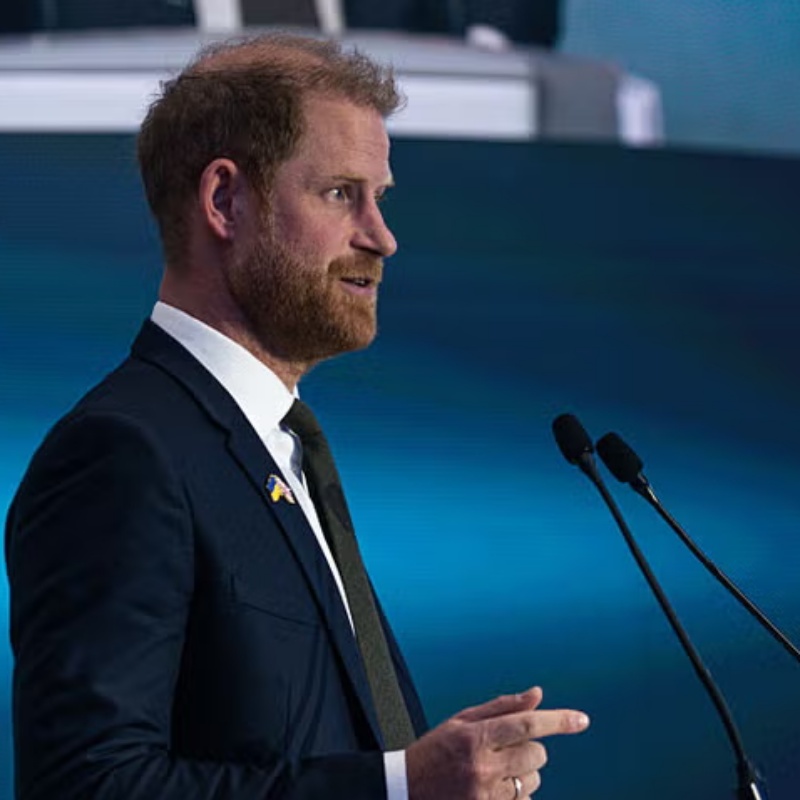
Prince Harry has issued one of his strongest public statements in years, warning that rising antisemitism is becoming “deeply troubling” as tensions continue to grow across the UK and beyond.
In a powerful new essay written for The New Statesman, the Duke of Sussex reflected on recent attacks targeting Jewish communities and warned that hatred fuelled by identity and religion is becoming increasingly dangerous. His comments arrive amid growing concern over antisemitic incidents, including the stabbing of two Jewish men in Golders Green earlier this year.
Rather than opening with politics, Harry focused on the human impact of escalating division, arguing that anger aimed at entire communities can quickly spiral into violence. He stressed that criticism of governments should never become hostility toward ordinary people based on faith or ethnicity. A fairly reasonable distinction, which modern public discourse somehow treats like advanced quantum physics.
The royal also addressed the war in the Middle East, acknowledging what he described as “deep and justified alarm” over the suffering in Gaza and Lebanon. However, Harry insisted it remains essential to separate political criticism from prejudice against Jewish communities.
Throughout the essay, Harry repeatedly referred to the actions of “the state” without directly naming Israel. He argued that democratic societies must allow criticism of governments, especially when questions around international humanitarian law are being raised, but warned that global tensions are increasingly spilling into everyday life and shaping public hostility.
One of the most striking moments came when Harry reflected on his own controversial past, appearing to reference the Nazi costume scandal that sparked outrage back in 2005. The prince admitted he remains “acutely aware” of mistakes he made in earlier years and said those experiences continue to shape how he views public responsibility and harmful rhetoric today.
Harry described those actions as “thoughtless” and said he has spent years learning from them, adding that clarity and accountability matter more than ever at a time when misinformation and distorted narratives are fuelling division.
He ended the essay with a direct plea for unity, warning that once anger becomes directed at entire religious or cultural groups, it stops being about justice altogether and becomes something far more destructive.
The remarks have already sparked major reaction online, with supporters praising Harry for speaking openly about antisemitism while also acknowledging wider humanitarian concerns. Critics, meanwhile, accused him of stepping into another politically charged debate likely to divide public opinion.
Which, in fairness, may be the only thing the internet still manages to unite on: turning every complicated issue into a battlefield within seven minutes.